Home · Search the Website · Contents · Admin


European & Latin American Trade Connection

The Kingdom of the Netherlands is part of the European Union, in which constellation the Netherlands Antilles and Aruba are assigned the status of Overseas Countries and Territories (OCTs).

Trade between Latin America and Europe has grown, and direct European investments in Latin America have more than tripled this decade.

Deregulation of telecommunication services, and the privatization of public companies in telecommunications, mining, oil, utilities, public works, manufacturing and banking have attracted a spree of investments from European trade partners.

In the view of many Latin American countries European investments are welcome as they constitute a means to balance out the cultural, economic and political influence of the United States.

The European Union, which accounts for approximately 18% of Latin America's total trade, saw two-way trade grow by 8% in 1996 to an estimated US$ 80 billion, according to projections by Latin Trade Magazine based on 10-month data from the International Monetary Fund (IMF).

The European Union's exports with Latin America grew at an average annual rate of 14.3% between 1990 and 1995, higher than exports to any other region outside of the Union, according to the Madrid-based Institute for European Latin American Relations (IRELA).

"The economic growth and trade liberalization in almost all the countries in Latin America have fostered this increase in European sales to the region," said a report from the IRELA.

Latin America with a potential market of 500 million people, including some of the world's largest trading countries, is a potentially lucrative trading partner for Europe.

The driving force behind European trade with Latin America is the South American Common Market (MERCOSUR), since trade between the European Union and MERCOSUR, the two largest customs unions represents a valuable instrument in promoting and diversifying trade between the two regions.

The Economic Outlook for the Dutch Kingdom in the Americas

More and more, foreign multinationals are setting up manufacturing facilities in Latin America to take advantage of a growing local market as well as the creation of sub-regional trading groups.

The Dutch Government and Dutch industry are capitalizing on this new trend by fortifying and expanding the Dutch presence and influence in the region in the local banking and insurance industries, increasing trade missions and increasing strategic investments.

This takes place not only in MERCOSUR countries, but also in countries projected to become beneficiaries of the Free Trade Area of the Americas (FTAA), such as the Central American Common Market (CACM), the North American Free Trade Agreement (NAFTA), the Andean Pact, and Caribbean Community and Common Market (CARICOM).

This is evident from the fact that overall foreign direct investment in Latin America measured in 1997 was led by the United States, followed in that order by Spain, the United Kingdom, France, Germany and The Netherlands.

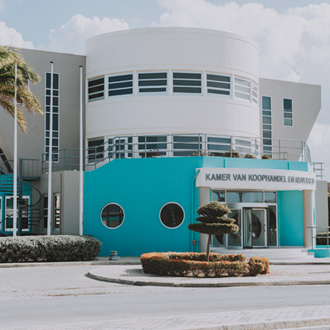
In this scenario the Netherlands Antilles and Aruba play pivotal roles, as they are strategically located between the Americas and Europe, and are prime offshore financial centers. As such the Aruba Chamber of Commerce and Industry has been appointed by the Netherlands Foreign Trade Agency (EVD) to act as an outpost for Dutch companies wishing to internationalize their trading and investment activities. The main objective is to provide these Dutch companies with information and assistance in order to identify potential opportunities with and/or through Aruba.

End of March 1999 Aruba became an associate member of the Association of Caribbean States, a multilateral governmental association with the objective to stimulate interregional trade. The island is already an associate member of the Caribbean Development Commission for Cooperation and the Economic Commission for Latin America. In addition, she holds the observer status in the Caribbean Community (CARICOM) and the Organization of American States (OAS).

To further build on current international economic trends and bilateral trade between the European Union and Latin America, the Dutch Kingdom has drafted a joint foreign economic policy for the three partner countries of the Kingdom.

This policy for the Caribbean calls for intensification of the economic relations with the region, through, and together with the Netherlands Antilles and Aruba.

This joint policy focuses on promoting sustainable development in the Caribbean, promoting the adherence to the rule of law, democracy and human rights, and improving regional and bilateral cooperation in trade.

The role of the Netherlands Antilles and Aruba will be essential in such.

As NAFTA and MERCOSUR increase the economic vulnerability of Caribbean nations, Dutch Kingdom regional policy calls for sustaining affiliation of CARICOM with MERCOSUR in which the former already has the status of observer, or encourage affiliation with the CACM as a stepping stone to the FTAA.

The European integration into a singular market and the introduction of a common European currency, the Euro, on January 1, 1999 will impact trade with the Americas.

With the European Central Bank headed by a Dutch national the Dutch Kingdom and its three constituent countries are strategically positioned to take advantage of the trade potential with the Americas for the coming years.

Sources:

1   Latin Trade, June 1997, Foreign Trade pp. 10A-12A
2   Latin Trade, June 1997, Foreign Investment pp.13A
3   Latin Trade, November 1997. The European Connection, pp. 39-44
4   Tweede Kamer der Staten-Generaal, vergaderjaar 1997-1998. 25535.
     Regiobeleidsdocumenten/landenbeleidsdocumenten.
5   Regiobeleidsdocument Caribisch Gebied


    Send mail to sysadmin@arubachamber.com with questions or comments about this web site.
Copyright © 2005 Chamber of Commerce and Industry Aruba